 Artificially generated image
 Kitchen Organization Ideas: Modern Inspiration and Smart Storage Solutions
Outline and Why Kitchen Organization Matters
An organized kitchen does more than look polished; it changes how every meal begins and ends. When utensils, ingredients, and appliances live in sensible places, prep feels quicker, cleanup feels lighter, and the room works with you instead of against you. Modern kitchens also have to balance beauty, storage, and daily traffic, especially in homes where cooking, chatting, and homework happen at once. That is why smart organization is no longer a finishing touch but a practical design choice.
This article follows a clear path so the ideas build on one another instead of landing like a pile of random tips. The outline is simple: • first, define how organization supports daily workflow • second, explore kitchen organization ideas that reduce friction during cooking and cleaning • third, look at modern kitchen inspiration that blends function with a current visual style • fourth, compare storage solutions for small, large, and awkward rooms • fifth, end with practical guidance for homeowners, renters, and busy cooks who want results they can maintain. Beginning with an outline matters because the most successful kitchens are planned in layers. People often start by buying bins, drawer inserts, or matching jars, only to discover that attractive accessories cannot solve a poor layout. Real organization begins with behavior: where coffee is made, where lunch boxes are packed, where dishes land after the dishwasher runs, and where grocery overflow tends to appear.
There is also a strong financial case for better kitchen organization. When ingredients are visible and grouped logically, households waste less food because forgotten items are less likely to expire in the back of a cabinet. When cookware is easy to access, people are more likely to use what they already own instead of buying duplicates. Design experts often note that kitchens perform best when movement feels intuitive, and practical planning supports that goal more than decoration alone. In other words, a tidy kitchen is not merely about aesthetics; it can support faster meal prep, more confident cooking, safer movement, and less visual noise. Think of it as giving the busiest room in the house a calmer script. Once the script is clear, every drawer, shelf, and surface has a better chance of earning its place.
Kitchen Organization Ideas That Improve Workflow
One of the most effective kitchen organization ideas is to arrange storage by task rather than by broad category alone. Many people keep all tools together, all dishes together, and all pantry items together, which sounds logical until the cooking process begins. A better method is zoning. Store knives, cutting boards, mixing bowls, and frequently used spices near the main prep area. Keep pots, lids, oils, and cooking utensils close to the stove. Place plates, lunch containers, and drinking glasses near the dishwasher or sink to make unloading faster. This task-based setup reduces unnecessary steps, and those saved steps matter more than they seem. In a kitchen used several times a day, even small inefficiencies add up.
Workflow is also shaped by what stays on the counter and what gets hidden away. A clean counter usually supports a calmer mind, but completely bare surfaces are not always practical. The smarter goal is selective visibility. Daily-use items such as a coffee maker, toaster, or utensil crock can stay accessible if they do not interrupt prep space. Less-used appliances, like a waffle maker or large food processor, usually belong in a lower cabinet, appliance garage, or pantry shelf. A simple test helps here: if an item is used several times a week, keep it within easy reach; if it appears once a month, it can move farther away. That approach balances convenience with visual order.
Drawer design deserves special attention because drawers often outperform deep shelves. A lower cabinet can become a shadowy cave where pans vanish behind other pans, while deep drawers bring everything into view with one pull. Compare these two setups: stacked frying pans in a shelf cabinet often require lifting and shifting, while the same pans stored vertically in a drawer divider are easier to grab and return. The difference is not dramatic in theory, but in daily use it feels like taking the scenic route versus stepping onto a direct path. Useful workflow upgrades include: • drawer dividers for utensils and tools • risers for mugs or small bowls • turntables for oils, vinegars, and sauces • labeled bins for baking supplies or school snacks • a tray or basket for items that tend to wander, such as mail, keys, or reusable shopping bags. The most successful kitchens are not arranged for a photograph; they are arranged for the ordinary rhythm of breakfast, dinner, cleanup, and everything in between.
Modern Kitchen Inspiration That Balances Style and Use
Modern kitchen inspiration often gets reduced to a visual checklist: matte finishes, sleek hardware, waterfall islands, and a calm neutral palette. Those elements can be beautiful, but the real strength of modern design lies in clarity. A modern kitchen tends to remove friction, reduce visual clutter, and let materials work harder. Flat-front cabinets, for example, are not just a style choice. They create uninterrupted lines that make small rooms feel cleaner and larger. Integrated handles or slim pulls can reinforce that effect, especially when paired with consistent cabinet heights and aligned storage zones. The room feels settled, almost like it has taken a deep breath.
Color and material choices matter because they shape how organized a kitchen appears, even before any drawer is opened. Light woods, warm whites, muted greens, charcoal accents, and natural stone remain popular because they feel current without leaning too hard on short-lived trends. Open shelving can add personality, but it works best when used sparingly. A few shelves for everyday dishes or cookbooks may look inviting; too many can turn into a display of visual noise. In comparison, closed cabinetry hides irregular packaging and creates a calmer backdrop. Homeowners who like the airy feeling of open storage but fear the maintenance often do well with a hybrid approach: one or two styled shelves, then mostly closed cabinets below and around them.
Lighting is another modern feature that influences organization more than people expect. Layered lighting makes the kitchen easier to use and more attractive. Under-cabinet lights brighten prep zones, pendant lights define an island, and ambient ceiling lighting keeps the whole room legible after sunset. A well-lit drawer or pantry is easier to maintain because users can actually see what is there. Layout also shapes the modern feel. The National Kitchen and Bath Association commonly recommends work aisles of around 42 inches for a single-cook kitchen and 48 inches for a two-cook kitchen, a reminder that comfort is measurable, not mystical. Modern inspiration, then, should not be copied like a showroom scene. It should be translated. A family that cooks nightly may need durable quartz counters, a broad landing space near the fridge, and stain-resistant cabinet fronts. A city renter may prefer portable shelving, magnetic organizers, and peel-and-stick lighting. The best modern kitchens are not the most dramatic ones; they are the ones where style quietly supports the day’s real work.
Kitchen Storage Solutions for Small, Busy, and Awkward Spaces
Kitchen storage solutions work best when they respond to the shape of the room instead of fighting it. In small kitchens, vertical space is often the first untapped asset. The area above cabinets can hold attractive baskets for rarely used serving pieces, while wall-mounted rails can keep utensils, pans, or mugs accessible without occupying drawers. Slim rolling carts can fit beside a refrigerator or at the end of a cabinet run, turning a few overlooked inches into useful storage for spices, oils, or produce. In larger kitchens, the problem is often the opposite: too much scattered space. There, storage should reduce wandering by placing items closer to where they are used. A large room still feels inefficient if the baking sheets are across the kitchen from the oven or the coffee supplies are split between three cabinets.
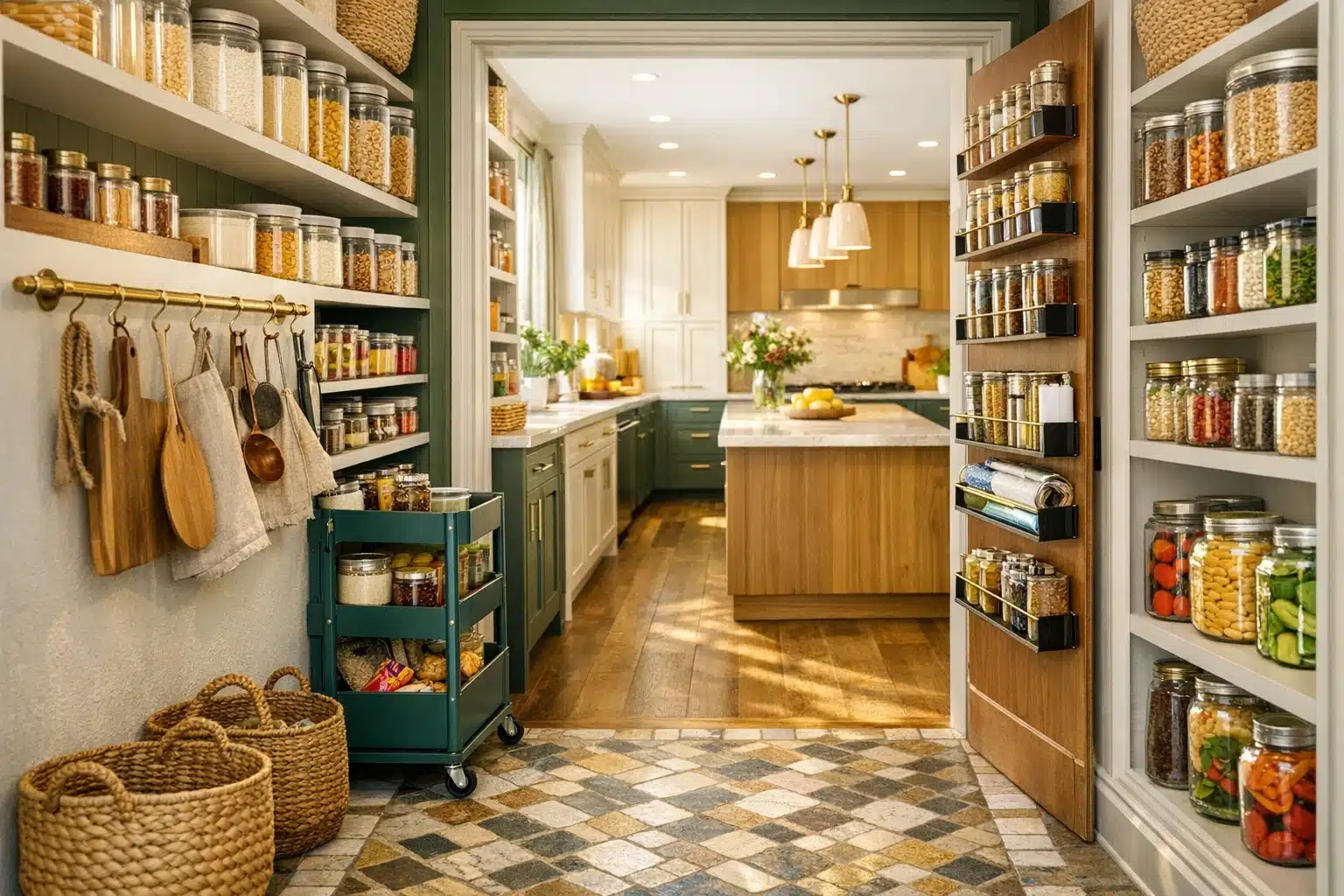
Pantries deserve a careful strategy because they can either become household heroes or quiet chaos factories. Clear containers are popular for good reason: they help people see quantities at a glance and create a cleaner look than mixed packaging. Still, not everything needs to be decanted. Dry goods used frequently, like flour, rice, pasta, and cereal, benefit most from uniform containers. Short-term items or products with important instructions can stay in original packaging inside labeled bins. Tiered shelves are especially useful for canned goods because they prevent smaller items from disappearing behind taller ones. Door-mounted racks can hold spices, wraps, or condiments, while pull-out baskets make lower pantry shelves easier to reach. Useful pantry categories often include: • breakfast items • baking ingredients • snacks • canned goods • dinner starters such as grains, broth, and pasta sauces.
Awkward spaces call for more specialized solutions. Corner cabinets can be fitted with lazy Susans, kidney-shaped pull-outs, or swing-out shelves that bring hidden contents into view. Toe-kick drawers under base cabinets are excellent for flat items such as linens, placemats, or trays. Deep drawers near the stove can hold pots and lids more efficiently than stacked cabinets, especially when paired with internal dividers. Peg systems inside drawers keep plates, bowls, and storage containers from sliding around. Even the sink cabinet can become more productive with a tension rod for spray bottles, a caddy for brushes, and shallow bins that avoid the plumbing. It helps to remember some standard dimensions when planning upgrades. Many base counters are about 24 inches deep, which means anything stored beyond arm’s reach quickly becomes inconvenient. Smart storage solutions respect that limit by pulling contents forward, lifting them upward, or dividing them into zones. When storage matches real behavior, the kitchen stops feeling crowded and starts feeling capable.
Conclusion for Homeowners, Renters, and Everyday Cooks
A better kitchen rarely appears after one dramatic makeover; it usually emerges from a sequence of thoughtful decisions. For homeowners planning a renovation, the priority should be lasting structure: strong drawers, useful aisle widths, practical lighting, and storage planned around routine. For renters, the focus may be flexible improvements such as shelf risers, labeled bins, freestanding carts, magnetic racks, and removable hooks. For busy families, the most powerful change is often zoning, because it turns the room into a place where several people can move without colliding physically or mentally. If one person can unload dishes, another can make lunch, and someone else can brew coffee without opening the same cabinet three times, the design is doing its job.
It also helps to set realistic goals. A well-organized kitchen does not mean every jar matches or every shelf looks like a catalog page. It means the room supports the way you live. Start by editing what no longer earns space. Group what remains by task. Test the arrangement for a week, then adjust rather than forcing a system that looks clever but feels awkward. Many households benefit from a short reset routine: five minutes at night to clear counters, return tools, check leftovers, and prepare one high-traffic zone for the next morning. That small habit protects the larger system.
If you are wondering where to begin, start with one area that causes daily irritation. It might be a chaotic junk drawer, a pantry shelf where ingredients vanish, or a corner cabinet that swallows cookware whole. Improving a single pain point often creates momentum for the next one. In the end, the most successful kitchen organization ideas, modern design choices, and storage solutions have something in common: they respect real life. They help the room welcome a rushed breakfast, a quiet cup of tea, a weekend baking project, or a sink full of dishes after dinner with friends. A good kitchen does not ask for perfection. It offers steadiness, efficiency, and a little more breathing room in the middle of everyday life.