Bathroom Design Ideas for a Small Modern Makeover
A bathroom may be one of the smallest rooms in the house, yet it has an oversized effect on daily comfort, storage, and even how calm a morning feels. Good design matters because this space has to work hard: it must handle moisture, support routines, and still look inviting in limited square footage. Whether you are planning a compact refresh or a full renovation, smart choices in layout, light, and materials can make a modest room feel purposeful and modern.
Outline
1. Planning the room: measure carefully, protect movement paths, and shape the layout around daily use. 2. Small bathroom makeover ideas: gain function through compact fixtures, smarter storage, and visual techniques that reduce clutter. 3. Modern bathroom inspiration: compare finishes, colors, and hardware that feel current without becoming tiring. 4. Lighting and finishing details: use mirrors, ventilation, and layered light to improve comfort and atmosphere. 5. Conclusion and action plan: bring design, budget, and practicality together for a bathroom that works beautifully over time.
1. Start with the Layout: The Best Bathroom Design Ideas Begin on Paper
The strongest bathroom design ideas rarely start with tile samples or paint cards. They begin with a clear plan for how the room will function. In a compact bathroom, the layout is not just one decision among many; it is the decision that shapes every other one. A beautiful vanity means very little if the door hits it, and an elegant tub loses value fast if the room feels cramped around it. Before choosing finishes, it helps to measure wall lengths, ceiling height, window placement, plumbing locations, and the swing of every door. These measurements reveal what is realistically possible and what only looks good in a showroom.
A practical layout balances three things: circulation, storage, and fixture comfort. Most homeowners need enough room to move from sink to toilet to shower without twisting sideways or blocking drawers. Local building codes often set minimum clearances, but good design usually aims for comfort beyond the bare minimum. For example, a floating vanity can expose more floor and make a narrow room seem wider, while a pedestal sink looks light but often sacrifices useful storage. That comparison matters in a small bathroom where every inch has a job.
When evaluating layouts, it helps to think in zones:
• wet zone for shower or tub
• dry zone for vanity and storage
• circulation zone for entering, turning, and cleaning
This simple framework helps prevent a common mistake: placing all attention on looks while ignoring everyday movement. In many homes, keeping plumbing in roughly the same area can also reduce renovation costs, because moving drains and supply lines often increases labor and complexity. That does not mean you must accept a poor arrangement forever, only that you should weigh aesthetic gains against construction effort. A short move of a vanity may be manageable; relocating a toilet stack can be far more involved.
Room shape also influences smart choices. In a long, narrow bathroom, lining fixtures on one side can open a clearer path. In a square room, a corner shower may free up more central floor area. Pocket doors or outward-swinging doors can help in especially tight spaces, though they must be evaluated for privacy, sound control, and wall construction. Think of the layout as the silent architecture behind the experience. When it is right, the room feels natural, almost effortless, like it always knew where you needed to be.
2. Small Bathroom Makeover Ideas That Create More Space Without Adding Square Footage
A small bathroom makeover is often less about expansion and more about editing. The goal is not to trick the eye with empty design clichés, but to remove friction. Every object, surface, and storage choice should reduce visual noise or improve use. That is why successful small-bathroom projects frequently rely on a few reliable strategies: compact fixtures, better vertical storage, simpler sightlines, and finishes that bounce light rather than swallow it.
One of the most effective changes is replacing oversized elements with slimmer alternatives. A shallow-depth vanity, a wall-hung toilet where installation allows, or a narrower sink can free crucial inches. Those inches matter more than they sound. In a room that may only be five to eight feet wide, even two or three inches can improve door clearance, standing room, or cleaning access. A walk-in shower with a clear glass panel usually feels lighter than an opaque enclosure or curtain because the eye can travel farther across the room. If a bathtub is rarely used, swapping it for a shower may be the single most transformative makeover move.
Storage deserves equal attention. Clutter makes a small bathroom feel even smaller, so concealed and vertical storage often outperform decorative pieces. Consider options such as:
• recessed medicine cabinets that sit between wall studs
• tall narrow cabinets above the toilet or beside the vanity
• open shelves used sparingly for folded towels and daily essentials
• drawer organizers that prevent counters from becoming catch-all zones
Color and finish choices also influence the sense of scale. Light tones reflect more illumination, but that does not mean every small bathroom must be white. Soft greige, pale stone, muted green, warm sand, and light charcoal can all work well when paired with contrast in moderation. Large-format tiles are another useful tool because they reduce grout lines, creating a calmer visual field. By contrast, tiny busy patterns can energize a space but may also make it feel fragmented if overused.
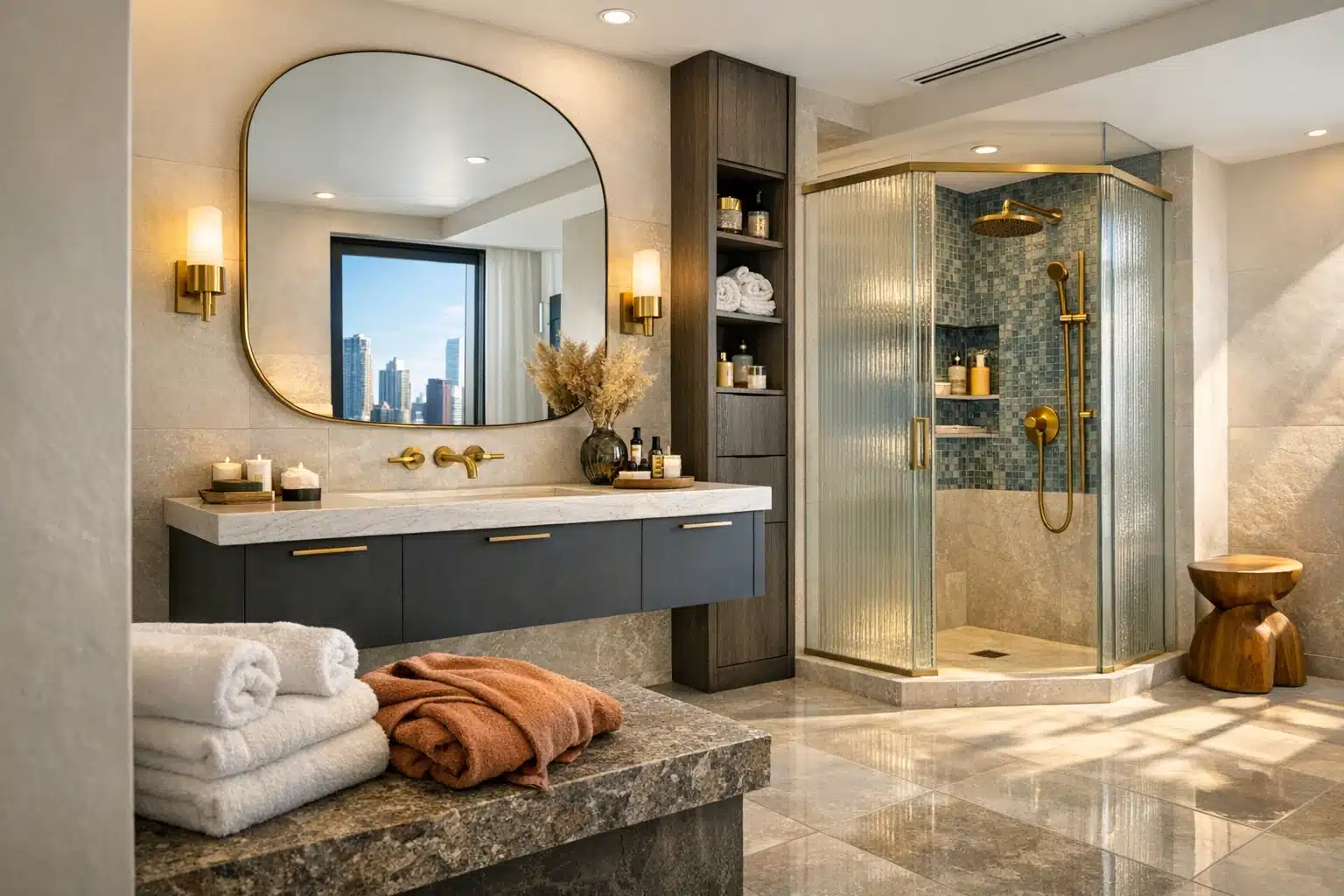
Mirrors are not magic, but they are undeniably useful. A wide mirror over the vanity can double the sense of depth, especially when it reflects a window or good lighting. Pair that with fewer countertop items, coordinated hardware, and one or two thoughtful accents, and the room begins to breathe. A small bathroom makeover succeeds when the space feels easier, cleaner, and more intuitive. It should not merely look remodeled in photos; it should make the first ten minutes of the day smoother in real life.
3. Modern Bathroom Inspiration: Materials, Colors, and Fixtures That Feel Current and Lasting
Modern bathroom inspiration often gets reduced to a mood board of black fixtures, white tile, and dramatic mirrors. While that look can be striking, modern design is broader and more durable than one social-media formula. At its best, a modern bathroom is calm, edited, functional, and intentional. It values clean lines, practical materials, and a sense of order. The result should feel contemporary today without looking stranded in a trend cycle five years from now.
Material selection plays a major role. Porcelain tile remains one of the most practical choices for floors and shower walls because it is durable, water-resistant, and available in finishes that mimic stone, concrete, or wood. Natural stone can be beautiful, but it often requires more maintenance and sealing, which may not suit every household. Quartz vanity tops are popular for similar reasons: they offer a clean look with lower maintenance than many porous stones. When comparing finishes, the decision is rarely about luxury alone. It is about the relationship between beauty, cleaning effort, and longevity.
Modern color palettes have expanded beyond cold minimalism. Warm whites, mushroom tones, olive, clay, dusty blue, and charcoal all appear frequently in current interiors because they soften the room without making it feel dated. A useful approach is to build the bathroom in layers:
• a quiet base color for walls or tile
• one anchoring material such as wood-look vanity fronts or stone-look flooring
• a contrasting metal finish for taps, handles, or lighting
• a small accent color in textiles or art
Fixtures can shape the style quickly. Wall-mounted faucets look sleek and free up countertop space, but they may increase installation complexity and should be planned early. Widespread faucets feel classic-modern, while single-handle models tend to suit tighter vanities and easier cleaning. Matte black hardware creates graphic contrast, brushed nickel feels versatile, brass adds warmth, and polished chrome remains one of the easiest finishes to coordinate. None is universally best; the right choice depends on the room’s light, surrounding colors, and the mood you want.
Modern inspiration also benefits from restraint. Too many statement pieces compete with each other. A ribbed vanity, sculptural sconce, patterned floor, fluted glass screen, and bold wallpaper can each work well, but not all at once in a small room. Think of modern design like a well-cut jacket: sharp, comfortable, and uncluttered. It does not need to shout. It just needs to fit beautifully.
4. Lighting, Mirrors, and the Finishing Details That Make a Bathroom Feel Complete
Many bathroom makeovers stall at the obvious choices of tile, vanity, and paint, yet the room’s real atmosphere often depends on the quieter details. Lighting, mirrors, ventilation, hardware, and texture can either sharpen the design or leave it feeling unfinished. In small bathrooms especially, these elements do double duty. They improve function while also shaping how large, bright, and calm the room appears.
Lighting should be layered rather than solved with a single ceiling fixture. An overhead light can illuminate the room broadly, but it often casts shadows on the face. Vanity sconces placed at eye level or slightly above are usually more flattering for grooming tasks because they distribute light more evenly. LED mirrors can work well in compact modern bathrooms, though the best ones provide comfortable brightness rather than harsh glare. If the bathroom has no natural light, choosing bulbs in a balanced color temperature can help the room feel cleaner and more natural. A space lit like a hospital corridor is technically bright, but rarely inviting.
Mirrors deserve more thought than their size alone. A mirror that stretches wider than the vanity can enhance scale and reflect more light, while a framed mirror may add definition in a room with many smooth surfaces. Rounded mirrors soften a space full of tile edges and rectangular fittings. Cabinet mirrors increase storage, but plain mirrors can feel lighter and more decorative. Again, the right answer depends on what the room lacks most: storage, softness, or reflected light.
Then come the finishing details, the little decisions that quietly determine whether the room feels composed:
• towel bars placed within natural reach of the shower or sink
• hooks for everyday robes and hand towels
• coordinated hardware finishes rather than a mix of unrelated metals
• slip-resistant flooring, especially in family bathrooms
• strong ventilation to manage humidity and protect paint, grout, and cabinetry
Ventilation is particularly important. Bathrooms generate persistent moisture, and poor airflow can contribute to peeling paint, musty smells, and mold growth. A well-sized exhaust fan is not glamorous, but it protects the investment you just made. Textiles can also shift the feel of the room quickly. A woven bath mat, crisp towels, and a shower curtain in a subtle texture can warm modern finishes without adding clutter. This is where the bathroom stops feeling like a project and starts feeling like a place someone actually lives in. A well-designed room is practical, yes, but it should also greet you gently at the start of the day.
5. Conclusion: How to Build a Small Modern Bathroom That Works for Real Life
If you are planning a bathroom update, the most useful mindset is to treat the project as a balance between design ambition and daily routine. A small modern bathroom does not need every premium feature to succeed. It needs a layout that respects movement, storage that prevents visible clutter, and finishes that can handle moisture, cleaning, and repeated use. Homeowners often get the best results by identifying one or two areas worth prioritizing, such as a better shower, a more functional vanity, or improved lighting, instead of trying to make every element a showpiece.
Budget planning becomes easier when choices are separated into splurge, save, and postpone categories. For example, waterproofing, plumbing quality, and ventilation are usually worth protecting because failures in those areas can become expensive later. Decorative items, mirrors, or hardware may offer more room for flexibility. In many remodels, keeping the existing plumbing layout reduces labor costs, while investing in smart storage delivers a noticeable improvement every single day. That is a better trade than spending heavily on a trend-forward finish that looks dramatic but solves no practical problem.
As a simple decision guide, ask these questions before committing:
• Does this choice make the room easier to use?
• Will it still look good when the room is not styled for a photo?
• Is it easy to clean and durable in a damp environment?
• Does it support the way the household actually lives?
These questions keep the makeover grounded. They also help renters, first-time renovators, and long-term homeowners avoid one of the most common mistakes in bathroom design: chasing inspiration without translating it into function. The best modern bathrooms feel edited rather than empty, polished rather than precious. They make ordinary habits feel smoother, from brushing teeth to finding a towel to stepping into good light on a rushed weekday morning.
For readers looking at a cramped, outdated bathroom and wondering where to begin, start with the plan, not the panic. Measure the space, define your priorities, collect a few material references, and choose improvements that serve both style and use. When smart bathroom design ideas, a thoughtful small bathroom makeover, and carefully selected modern inspiration come together, even a compact room can feel open, practical, and quietly luxurious in the ways that matter most.