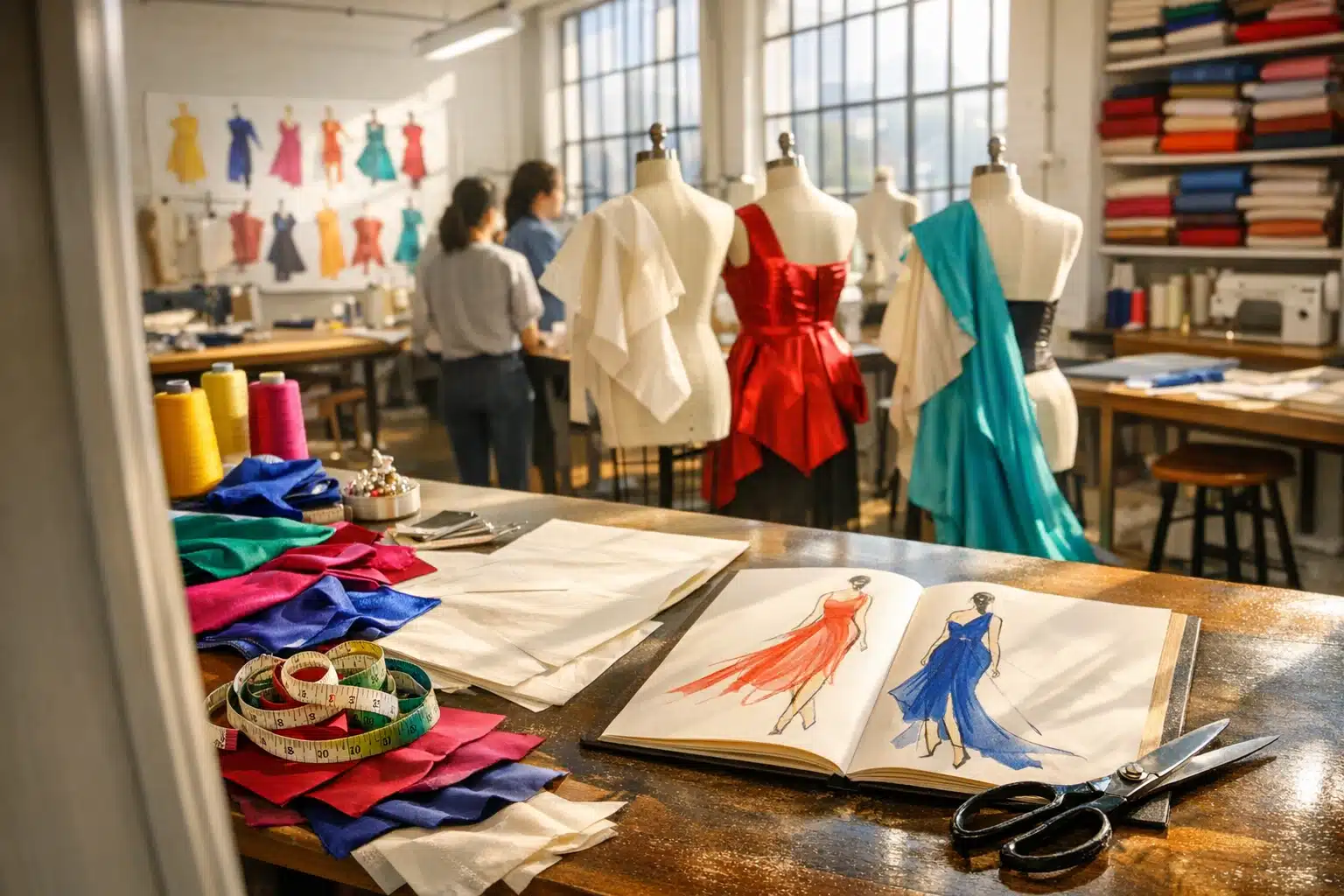
Fashion Design Classes Online: A Guide to Fashion Illustration Training
Introduction and Outline
Fashion education sits at an interesting crossroads: part art studio, part technical workshop, and part business training ground. A strong course teaches students how to translate visual instinct into garments that fit real bodies, meet practical budgets, and speak to specific markets. Online programs have widened access, allowing learners far from design hubs to study seriously without relocating. Add illustration training, and the sketchbook turns from a personal notebook into a professional language.
That mix of creativity and precision is exactly why the topic matters now. The fashion world has become more connected, more digital, and more demanding at the same time. Students are expected to understand fabrics, construction, trend research, visual storytelling, and increasingly, software used for technical flats, presentation boards, and even 3D prototyping. A good learning path does not simply teach someone to make attractive drawings or stylish garments. It helps them think through process, problem-solving, and the relationship between ideas and execution.
Another reason this subject is relevant is accessibility. In the past, many aspiring designers assumed they needed to move to a major city, attend an expensive school, and build a network through physical proximity alone. That is no longer the only route. Short courses, certificate programs, live online workshops, and specialized illustration training have created more entry points. Some learners want a degree and a studio routine. Others want to build a portfolio while working another job. Both goals are valid, but they require different educational choices.
This article starts with a simple outline so readers can move through the topic with purpose rather than guesswork.
- What traditional fashion design classes usually include
- How online fashion education compares in structure, cost, and flexibility
- Why fashion illustration remains central to communication and portfolio building
- Which learning format fits different students, schedules, and career plans
- How to turn training into visible, practical progress
Think of the sections ahead as a well-lit fitting room for decisions. Some options may feel right the moment you try them on; others may look appealing at first and then reveal awkward seams. The goal is not to crown one format as universally superior. It is to help you understand the strengths, trade-offs, and best uses of each path so you can invest your time with more confidence and less confusion.
What Fashion Design Classes Teach in a Physical Learning Environment
Traditional fashion design classes remain valuable because they place students inside a working environment where making, testing, correcting, and presenting happen in real time. In-person learning is especially useful for skills that depend on touch, proportion, and immediate instructor feedback. Draping on a dress form, checking seam accuracy, learning how different fibers respond to heat and tension, and troubleshooting fit issues are easier when a teacher can physically point to a problem and demonstrate a solution on the spot. For many beginners, that kind of direct correction shortens the learning curve.
A strong classroom program usually covers more than sketching and sewing. Depending on the school or course level, students may study pattern making, garment construction, textile fundamentals, color theory, collection development, trend research, technical drawing, and merchandising basics. More comprehensive programs often add software, portfolio presentation, and industry context. The major advantage of this format is structure. Classes meet on a schedule, projects have firm deadlines, and critique sessions train students to explain their choices clearly. That routine can be demanding, but it builds discipline, which matters in a field where creative work still has to meet production calendars and client expectations.
Physical classes also offer a social and professional layer that is difficult to replicate fully online. Students learn by watching peers solve problems differently. One person may excel at tailoring, another at surface design, another at presentation boards. The room becomes a quiet exchange of methods, references, and standards. Over time, that environment sharpens taste and practical judgment. It also mirrors a real studio culture, where ideas are rarely developed in isolation.
When comparing classroom options, it helps to distinguish among formats:
- Short workshops are useful for exploring a specialty such as draping or corsetry
- Certificate programs often focus on employable skills and portfolio development
- Degree programs usually offer broader theory, industry context, and more time to mature creatively
Still, traditional classes are not perfect. They often cost more, require commuting or relocation, and leave less room for people balancing work or family responsibilities. Some schools also emphasize conceptual work more than employable production skills, so curriculum matters. Before enrolling, look for access to sewing labs, instructor experience, student portfolios, and course outcomes. The best class is not necessarily the most famous one. It is the one that gives you rigorous practice, credible feedback, and enough repetition to turn curiosity into competence.
How Fashion Design Online Programs Work and Who They Suit Best
Fashion design online has evolved from a secondary option into a serious learning route for many students. What changed is not only technology, but also teaching design. Today, online programs can combine recorded lessons, live critique sessions, downloadable templates, digital assignments, peer review, and one-to-one mentoring. A student can learn silhouette development in the morning, watch a garment construction demonstration at lunch, and upload sketches for feedback by evening. That flexibility is one of the biggest reasons online education attracts career changers, remote learners, parents, and people testing the field before committing to a larger program.
Not all online courses are built the same, so comparisons matter. Asynchronous courses let students move at their own pace, which is useful for those with irregular schedules. The trade-off is that self-paced study demands discipline; without deadlines, even talented learners can drift. Live online classes create accountability and allow direct interaction, but they require fixed attendance and may be affected by time zones. More advanced programs sometimes include software training in Adobe Illustrator, Photoshop, or 3D tools such as CLO, which reflects the growing digital side of fashion development. These platforms do not replace fabric handling, yet they are increasingly relevant for presenting ideas, refining line plans, and communicating with production teams.
One common criticism of online study is the lack of tactile experience. That concern is valid. Fabric weight, stretch recovery, and drape are hard to understand fully through a screen. Good online programs address this by assigning sample swatch kits, home sewing exercises, or guided projects using accessible materials. The strongest courses are honest about their limitations and compensate with strong teaching design rather than glossy promises.
When evaluating online fashion design training, look for a few practical markers:
- Clear weekly outcomes instead of vague inspiration-based modules
- Instructor feedback on actual student work, not only automated quizzes
- Portfolio-oriented assignments that lead to visible results
- A realistic tools list with transparent software or material costs
- Examples of student progress over time
Online learning works best for motivated students who can organize their schedule and seek help when they need it. It also suits learners who want to combine fashion study with another pathway, such as content creation, entrepreneurship, costume work, or freelance illustration. If a classroom offers the rhythm of a studio, online learning offers a customizable workbench. The question is not whether it is real education. The real question is whether the format matches your habits, resources, and goals closely enough to keep you moving.
Why Fashion Illustration Training Still Matters in a Digital Industry
Fashion illustration training is sometimes misunderstood as decorative, as if it belongs only to editorial fantasy or luxury mood boards. In practice, it is one of the clearest ways for a designer to think visually, communicate quickly, and refine an idea before investing time in fabric and construction. A sketch can test proportion, movement, silhouette, layering, and attitude in minutes. That is not a small advantage. When students learn illustration well, they are not merely producing pretty images; they are learning how to see decisions before those decisions become expensive.
Good illustration training usually starts with foundations: body proportion, pose, line quality, garment balance, and the relationship between clothing and movement. From there, students often move into fabric rendering, color application, detail drawing, and collection presentation. Many programs also teach technical flats, which are less expressive than stylized figures but essential in professional communication. A dramatic runway sketch may sell the mood of a collection, while a flat drawing explains the garment with practical clarity. Strong training helps students switch between those modes without confusion.
The hand-drawn versus digital debate is often overstated. Both approaches matter, and the best training usually blends them. Hand sketching builds speed, instinct, and confidence. Digital illustration improves polish, revision control, and presentation quality. A beginner who can sketch quickly on paper and refine the concept later in software has a flexible workflow that fits many modern contexts. This is especially useful for portfolios, freelance presentations, and collaborative feedback with instructors or clients.
Fashion illustration training can strengthen several abilities at once:
- Visual storytelling through pose, styling, and composition
- Observation of garment behavior on the body
- Communication of design details before sampling begins
- Portfolio development for school applications or entry-level opportunities
- Confidence during critiques, because ideas can be shown more clearly
There is also a psychological benefit. Illustration often becomes the bridge between imagination and action. A blank page can feel intimidating, but once the first lines appear, an abstract idea starts becoming workable. That shift matters for students who freeze at the scale of a full collection. Sketches break ambition into manageable steps. Whether your goal is womenswear, menswear, costume, streetwear, or accessories, illustration gives shape to thought. In a field crowded with visual noise, the ability to express a concept clearly and memorably remains a serious advantage.
Choosing the Right Path and Turning Training into Real Progress
If you are trying to choose among fashion design classes, online study, and illustration training, the best answer depends less on prestige and more on alignment. A teenager preparing for school applications, a professional changing careers, and a small business owner developing a capsule line may all need different forms of instruction. The most useful question is not “Which option sounds impressive?” but “Which option will I actually complete, practice, and use?” Consistency beats aspiration when skills are built through repetition.
For learners who need structure, studio access, and in-person correction, classroom-based fashion design classes usually offer the strongest foundation. They are especially helpful when you are learning sewing, pattern cutting, fit analysis, or draping for the first time. For learners with limited time, long commutes, or a need for flexible scheduling, online fashion design programs can be highly effective if they include critique, deadlines, and portfolio assignments. For learners who already have design ideas but struggle to express them visually, fashion illustration training can unlock faster communication and a more convincing body of work.
A practical decision checklist can help narrow your choice:
- What exact skill do you want after twelve weeks: sewing accuracy, portfolio pieces, technical flats, or broader design fluency?
- Do you learn better through live correction or independent practice?
- Can you afford materials, software, and travel in addition to tuition?
- Will the course leave you with finished work you can show others?
- Does the instructor’s background match the area you want to enter?
Once you enroll, progress comes from output, not just attendance. Save sketches, revise assignments, photograph mock-ups carefully, and build a portfolio that shows development rather than only polished final images. Employers, schools, and clients often want evidence of thinking as much as evidence of talent. They look for process, problem-solving, and follow-through. A portfolio with before-and-after improvements can say more than a dozen untouched pages of stylish drawings.
For the target audience of this guide, the takeaway is encouraging and practical at once. You do not need a single perfect route to begin. You need a route that matches your resources, your learning style, and the kind of work you hope to do. Start where access is real, choose training that produces visible skills, and keep building. In fashion, progress rarely arrives as a dramatic reveal. More often, it appears stitch by stitch, sketch by sketch, until one day your ideas stop feeling distant and start looking ready for the world.