Minimalist Home Ideas and Organization Tips for a Simpler Lifestyle
Introduction and Outline: Why Minimalism Still Matters
Minimalism is less about owning almost nothing and more about making room for what supports your day. In a home crowded by visual noise, even small choices such as clearer surfaces, simpler storage, and fewer duplicate items can reduce friction. The appeal is practical as much as aesthetic: easier cleaning, faster decisions, and spaces that feel calm instead of demanding. That is why minimalist ideas remain relevant for busy households, renters, families, and anyone tired of managing too much stuff.
At its core, minimalism is a filtering process. It asks a simple question: does this object, habit, or commitment serve a real purpose? When the answer is yes, the item stays and earns its space. When the answer is no, the home becomes a storage unit for postponed decisions. Many people are drawn to minimalist interiors because they look orderly in photos, but the deeper benefit is functional. A well-edited room is usually easier to clean, easier to maintain, and easier to enjoy. That matters in real life, where people are balancing work, family, errands, and the low hum of digital distraction.
This article is structured to move from big-picture thinking to practical action. Instead of treating minimalism like a rigid rulebook, it approaches the topic as a flexible framework. You do not need white walls, expensive furniture, or an empty apartment to live more simply. You need better criteria, better systems, and habits that stop clutter before it multiplies.
- First, the guide defines what minimalism looks like in a modern home and why it remains useful.
- Second, it explores minimalist home ideas room by room, with attention to layout, furniture, and visual balance.
- Third, it breaks down minimalist organization methods that make storage intuitive rather than decorative.
- Fourth, it connects the home to daily behavior through realistic minimalist lifestyle tips.
- Fifth, it closes with a practical conclusion aimed at readers who want a simpler home that still feels warm and livable.
Think of minimalism as clearing a path through a crowded room. The goal is not emptiness for its own sake. The goal is movement, ease, and a home that supports the life inside it. Once that perspective clicks, minimalist choices begin to feel less like sacrifice and more like relief.
Minimalist Home Ideas: Designing Rooms That Feel Calm and Useful
Minimalist home design works best when it solves problems, not when it performs for an audience. A truly useful minimalist room does not have to look stark or cold. It simply contains fewer distractions, more intentional placement, and furniture that earns its keep. One of the most effective home ideas is to start with function before style. In a living room, for example, decide how the room is actually used. Is it for reading, family conversation, television, or occasional guests? Once the priority is clear, it becomes easier to remove furniture that interrupts movement or fills space without improving it.
A common difference between cluttered interiors and minimalist ones is the treatment of surfaces. In many homes, countertops, coffee tables, dressers, and entryway consoles become drop zones for receipts, chargers, unopened mail, and random objects. Minimalist rooms protect those surfaces. Leaving some visual breathing space creates a calmer effect and makes cleaning faster. The same principle applies to walls. A few well-chosen pieces of art often create more impact than a scattered collection with no relationship to the room.
Room-by-room planning can make minimalism feel concrete rather than abstract:
- In the kitchen, keep everyday tools accessible and store specialty appliances out of sight unless used often.
- In the bedroom, reduce visible clothing and limit bedside items to essentials such as a lamp, book, or water glass.
- In the bathroom, decant or group products so the space feels orderly and easy to wipe down.
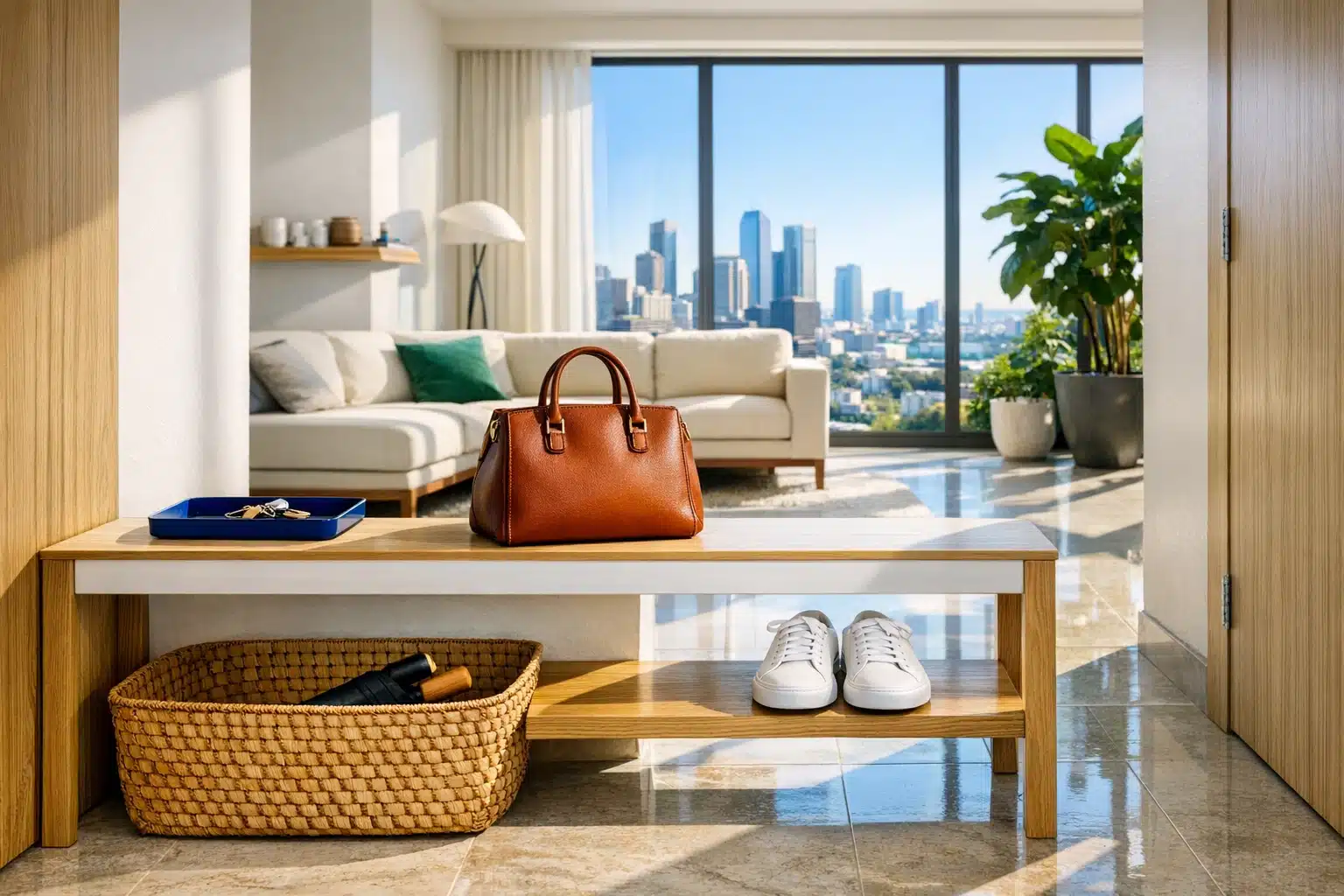
- In entryways, use one tray, one basket, and a defined hook system instead of several small catch-all spots.
Color also matters. Neutral palettes are often associated with minimalism because they reduce visual noise, but the more important factor is cohesion. A home can include warm wood tones, muted green, terracotta, navy, or soft black and still feel minimalist if the palette is restrained and repeated with intention. Texture becomes especially important here. Linen curtains, wool throws, ceramic lamps, and natural wood prevent a simple room from feeling flat. In other words, minimal does not have to mean lifeless. It can feel like a quiet morning: still, warm, and awake.
Furniture selection is another key comparison point. Traditional decorating sometimes rewards more pieces, more symmetry, and more filling of empty corners. Minimalist design asks whether each item improves comfort, storage, or flow. A bench with hidden storage may serve better than two decorative accent chairs. A larger rug that properly anchors a seating area can make the room feel more organized than several smaller pieces competing for attention. Open space is not wasted space if it improves movement and reduces stress.
Finally, lighting deserves more attention than it usually gets. Clean lines and fewer objects allow light to shape a room more dramatically. Maximize natural light where possible, and layer artificial lighting with ceiling fixtures, task lamps, and softer accent light. The result is a home that feels easier to inhabit. Good minimalist design is not about subtraction alone. It is about leaving behind enough clarity that the important things can be seen.
Minimalist Organization: Systems That Reduce Clutter Without Creating More Work
Minimalist organization is often confused with decorative storage, but the two are not the same. Buying bins, labels, drawer inserts, and matching boxes can make a space look tidy for a moment, yet clutter usually returns if the underlying system is weak. Minimalist organization begins before storage products enter the picture. The first step is reduction. There is little value in building elegant systems for objects that are broken, duplicated, expired, or rarely used. In practical terms, organization becomes much easier when the volume of belongings matches the available space.
A useful rule is to organize by frequency of use rather than by idealized identity. Many people store items according to who they hope to be instead of how they actually live. Exercise equipment may sit in the bedroom while everyday paperwork crowds the kitchen table. Craft supplies may occupy prime shelves while daily medications get buried in a drawer. Minimalist organization brings items closer to where they are used and gives the most convenient spots to the things that support regular routines.
Several foundational methods work especially well:
- Use containment limits: one shelf for baking tools, one basket for charging cables, one drawer for office supplies.
- Create zones: cooking, cleaning, paperwork, self-care, and hobby materials should each have a clear home.
- Store vertically where possible: shelves, risers, and door-mounted racks increase access without spreading clutter across surfaces.
- Keep the first layer visible: when items disappear under piles, they are often forgotten, repurchased, or neglected.
This is where minimalist organization differs from highly detailed systems that demand constant maintenance. If a method takes too long to reset, most people will stop using it. Compare two closets: one has color-coded hangers, narrow category divisions, and multiple seasonal subgroups; the other has simple sections for workwear, casual clothing, outerwear, and shoes. The first may look more impressive, but the second is often more sustainable because it asks less from the user. Good organization reduces decisions instead of adding them.
Paper clutter is another major challenge. Even in a digital age, forms, receipts, school notices, warranties, and mail accumulate quickly. A minimalist approach is to separate paperwork into only a few active categories, such as action, file, recycle, and shred. That small change prevents paper from drifting across tables like leaves in a windy yard. Digital clutter deserves the same attention. A clean desktop, named folders, fewer app notifications, and routine inbox triage can reduce cognitive overload in the same way that clear countertops reduce visual stress.
Maintenance matters as much as setup. A five-minute nightly reset, a weekly review of incoming items, and a monthly donation box can keep clutter from regaining momentum. Organization should feel like a support beam, not a performance. When systems are simple, visible, and tied to daily life, they stop being aspirational and start becoming reliable.
Minimalist Lifestyle Tips: Daily Habits That Make Simplicity Sustainable
A minimalist home is difficult to maintain without a minimalist approach to daily life. Clutter usually enters through habits before it appears on shelves, floors, or countertops. Purchases made out of boredom, rushed scheduling, duplicated subscriptions, and unexamined routines all create pressure that eventually becomes physical mess. That is why minimalist lifestyle tips are not limited to decor. They involve money, time, attention, and the small choices that quietly shape a week.
One of the most practical habits is intentional consumption. Before buying something, pause long enough to ask a few useful questions. Where will it live? How often will it be used? Does it replace something inferior, or does it simply add volume? This does not mean never buying attractive or enjoyable things. It means interrupting impulse with clarity. Many people find that a 24-hour or 72-hour waiting period reduces unnecessary purchases, especially online, where convenience can outpace reflection.
Time commitments deserve the same filter. A minimalist lifestyle is not just about fewer objects; it is also about fewer obligations that drain energy without returning value. Schedules can become cluttered in the same way drawers do. Saying yes by default leads to calendar sprawl, fragmented attention, and the constant feeling of being slightly behind. A simpler routine often includes more margin between tasks, fewer low-priority commitments, and repeated habits that lower decision fatigue.
- Plan meals around a short list of reliable staples instead of chasing novelty every day.
- Create a small rotating wardrobe to reduce morning decisions and laundry overflow.
- Limit notifications so your phone does not function like an alarm bell for other people’s priorities.
- Use a one-in, one-out rule for categories that tend to expand, such as clothing, mugs, or beauty products.
Minimalist living also benefits from ritual. A short morning reset, evening tidy, Sunday planning session, or monthly spending review can anchor the household. These routines are not glamorous, but they build stability. Imagine them as the quiet hinges on a well-made door: hardly visible, yet responsible for smooth movement. The aim is not self-denial. It is to free attention for things that matter more, whether that means deeper rest, more creative work, better relationships, or simply less rushing.
There is also an emotional side to minimalism. People often keep things because of guilt, fantasy, or fear. Gifts may feel loaded with obligation, aspirational purchases may symbolize a version of the self that never quite arrived, and backups of backups may offer temporary comfort. Minimalist living asks for honesty, not hardness. You can appreciate what something meant and still let it go. You can prefer fewer options because they make life easier, not because you lack taste or ambition.
For most readers, sustainability comes from moderation. Extreme minimalism is unnecessary for a calmer life. What works better is selective reduction, clear priorities, and habits gentle enough to survive real schedules. When daily life becomes simpler, the home follows. The result is not a showroom. It is a life with fewer moving parts and more breathing room.
Conclusion: Building a Simpler Home That Works for Real Life
If you are drawn to minimalist home ideas, organization strategies, and lifestyle changes, the most important takeaway is this: simplicity works best when it is tailored to your actual life. A parent managing school schedules will need different systems from a single renter in a small studio. Someone working from home will organize space differently from a person who is rarely there during the day. Minimalism is not a fixed visual formula. It is a practical editing process that helps you keep what serves you and release what does not.
Across the home, the same principles repeat. Rooms function better when furniture supports movement and surfaces are not overloaded. Storage improves when categories are clear and belongings are reduced before containers are added. Daily life feels lighter when spending, scheduling, and digital habits reflect intention rather than impulse. These ideas are powerful because they connect. A clearer closet can shorten mornings. A simpler kitchen can make meals easier. A calmer entryway can lower stress the moment you walk in the door.
For readers who want a realistic starting point, begin small and visible. Choose one shelf, one drawer, one countertop, or one daily habit. Finish that space completely, then notice the effect. Momentum often grows from proof, not theory. When you experience how much easier a cleared surface is to clean or how much quicker it is to leave the house from an organized entryway, minimalism stops being an abstract ideal and starts becoming common sense.
A simple approach for the next month might look like this:
- Week one: declutter one high-traffic area and remove obvious duplicates.
- Week two: create one organization system that matches your routine.
- Week three: reduce one category of incoming clutter, such as online purchases or paper mail.
- Week four: add a short maintenance ritual to keep progress steady.
There is no prize for owning the least or creating the emptiest room. The real reward is easier living. For households, professionals, students, and anyone overwhelmed by too much visual and mental noise, minimalism offers a steadier rhythm. It helps a home feel less like a warehouse for postponed decisions and more like a place that restores you. Done well, a simpler lifestyle does not shrink life. It gives your best priorities more room to breathe.